

Delivering Novel Therapies for RAS/MAPK Pathway Driven Cancers


Delivering the first breakthrough in a rare ovarian cancer
Approximately 30% of patients with low-grade serous ovarian cancer have a KRAS mutation, making it the most common type of gene mutation in the disease. We are advancing innovation in rare ovarian cancer, including the first FDA-approved treatment for KRAS-mutant recurrent low-grade serous ovarian cancer.
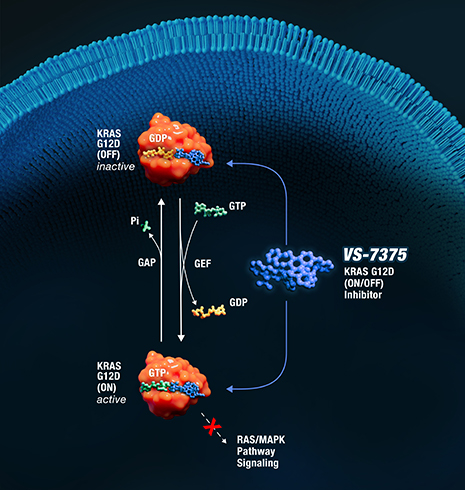
Selectively targeting the most prevalent KRAS mutation in human cancers
KRAS G12D represents 26% of all KRAS mutations, making it the most prevalent KRAS mutation in human cancers.
Advancing therapies that directly target KRAS G12D may help address a significant unmet need across multiple solid tumor types.

Precision targeting of RAS/MAPK pathway-driven cancers
Our pipeline is powered by ongoing trials and strategic collaborations centered on novel small molecule inhibitors targeting the critical RAS/MAPK signaling pathway known to drive cell survival and tumor growth. This includes targeting RAS directly with KRAS G12D inhibition, targeting the pathway downstream with RAF/MEK inhibition, and targeting the parallel pathway that drives resistance with FAK inhibition.
Get our latest news and updates
Stay informed on key announcements, the latest clinical developments, and more.

Ready to make an impact?
Explore career opportunities and discover what drives our people and our purpose.